
Table of Contents
- How to Remove Wax from Candle Jars
- Cleaning and Sanitizing Your Glass Vessel
- Is It Safe to Reuse Candle Jars for Drinking Glasses?
- Creative Candle Jar Upcycling Ideas for Every Room
- Don't Forget the Lids: Upcycling Candle Jar Lids
- Why Reusing Candle Jars Is Good for the Planet
- Conclusion
Last Updated: August 21, 2026
How to Remove Wax from Candle Jars
Learning how to reuse candle jars starts with removing leftover wax cleanly. The two most reliable approaches are the freezer method and the boiling water method, each suited to different situations.
The Freezer Method
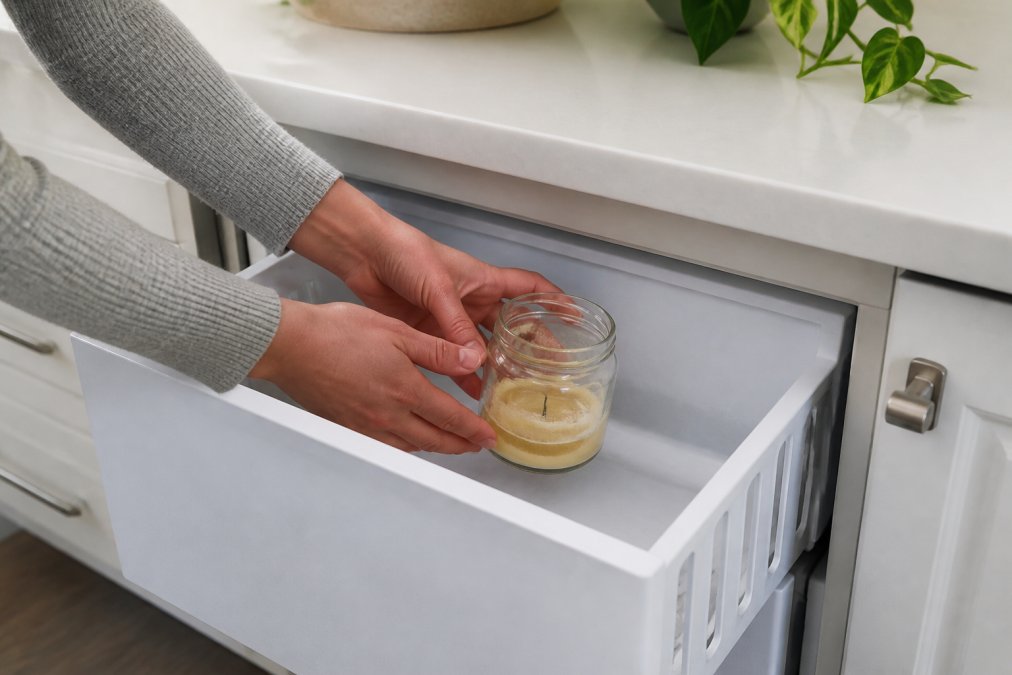
The freezer method is the safest, least messy approach. Cold temperatures cause wax to contract and pull away from glass walls, making it pop out in one or two solid pieces.
- Ensure the candle has cooled completely to room temperature.
- Place the jar upright in the freezer for 1 to 2 hours until the wax feels completely solid and slightly shrunken from the glass sides.
- Remove the jar and flip it upside down over a trash can. The wax disk will often fall out on its own.
- If it doesn't release, use a butter knife or dull spoon to gently lever the wax from one edge. A second freezer round usually works if needed.
- Wipe remaining residue with a dry paper towel before washing.
This method works especially well for paraffin and soy wax candles. Very thick-walled glass jars occasionally need up to 3 hours.
The Boiling Water Method
The boiling water method works on the opposite principle. Heat melts the wax so it floats to the surface and can be lifted off once it re-solidifies. This approach is particularly useful for jars with substantial wax remaining or stubborn residue.
- Bring a pot of water to a boil, then remove from heat. Do not pour actively boiling water into cold glass, thermal shock can crack the jar.
- Set the candle jar in a heat-resistant bowl or on a folded towel.
- Carefully pour hot (not boiling) water into the jar, leaving about an inch of space at the top.
- Watch as the wax melts and floats upward. Let the jar cool completely, then refrigerate for 30 minutes.
- Lift out the solidified wax disk and discard it. Pour the waxy water down the drain with plenty of hot running water to prevent clogging.
Removing Stubborn Wick Tabs and Adhesive Residue
After the wax is gone, you're often left with a metal wick tab stuck to the jar bottom and adhesive residue from the label.
For the wick tab, use a butter knife or flathead screwdriver to pry it up from one edge. If it's bonded tightly, place the jar back in the freezer for 20 minutes, the adhesive weakens with cold and the tab lifts cleanly.
For label adhesive, isopropyl alcohol is your best tool. Apply a small amount to a cotton swab and rub the area in small circles; it dissolves within a minute. A few drops of cooking oil followed by dish soap also works as a gentler alternative. Avoid anything abrasive on glass, as it can leave micro-scratches.
Cleaning and Sanitizing Your Glass Vessel
Once wax and adhesive are gone, proper cleaning separates a jar you can safely reuse from one that just looks clean. Any wax film left behind will make the jar smell off and create a greasy surface.
- Rinse the jar with hot water to remove loose wax particles.
- Add a few drops of dish soap and scrub the interior with a bottle brush or folded paper towel, paying attention to the bottom and the seam where the wick tab sat.
- Rinse thoroughly with hot water.
- For full sanitizing, especially if you plan to use the jar for cotton swabs, food storage, or anything that touches skin, run it through the dishwasher on a hot cycle, or fill it with boiling water and let it sit for 5 minutes before a final rinse.
A jar that held strongly scented wax sometimes retains faint fragrance even after washing. If that bothers you, place the clean jar in direct sunlight for a few hours, UV exposure helps neutralize lingering scent molecules. According to EPA guidance on household cleaning and sanitizing, hot water and soap effectively remove most surface contaminants from non-porous surfaces like glass.
Is It Safe to Reuse Candle Jars for Drinking Glasses?
Reusing candle jars as drinking glasses is generally safe for most commercially made glass candle jars, but several factors warrant checking first.
Glass quality matters most. Many candle jars are made from standard soda-lime glass, the same type used in drinking glasses and mason jars. These are safe for beverages once properly cleaned. However, some decorative vessels use thinner glass or non-food-grade coatings. If the jar feels flimsy or has unusual surface texture, skip the drinking glass idea.
Heat resistance is a real concern. Candle jars are designed to withstand gentle, sustained heat from a burning wick, not thermal shock from hot beverages. For hot drinks, use borosilicate glass, which is genuinely heat-resistant. Standard glass candle jars work better for cold drinks, smoothies, or room-temperature water.
Check for lead or heavy metals. Vintage or imported decorative glass occasionally contains lead-based pigments. The FDA guidance on glass and ceramics for food contact advises against using decorative glassware with painted interiors for food or beverages unless the manufacturer confirms it's food-safe. Clear glass jars from reputable candle makers are generally safe.
A clean, clear, thick-walled candle jar works fine as a cold drinking glass. For hot beverages, use borosilicate glass or choose a different reuse idea.
Creative Candle Jar Upcycling Ideas for Every Room
The real joy of reusing candle jars is discovering how many genuinely useful things they can become. A good glass jar is a blank canvas with options well beyond "put a succulent in it."
Storage and Organization
Glass jars are excellent storage containers. Candle jars specifically tend to have wide mouths and sturdy bases that make them practical organizers.
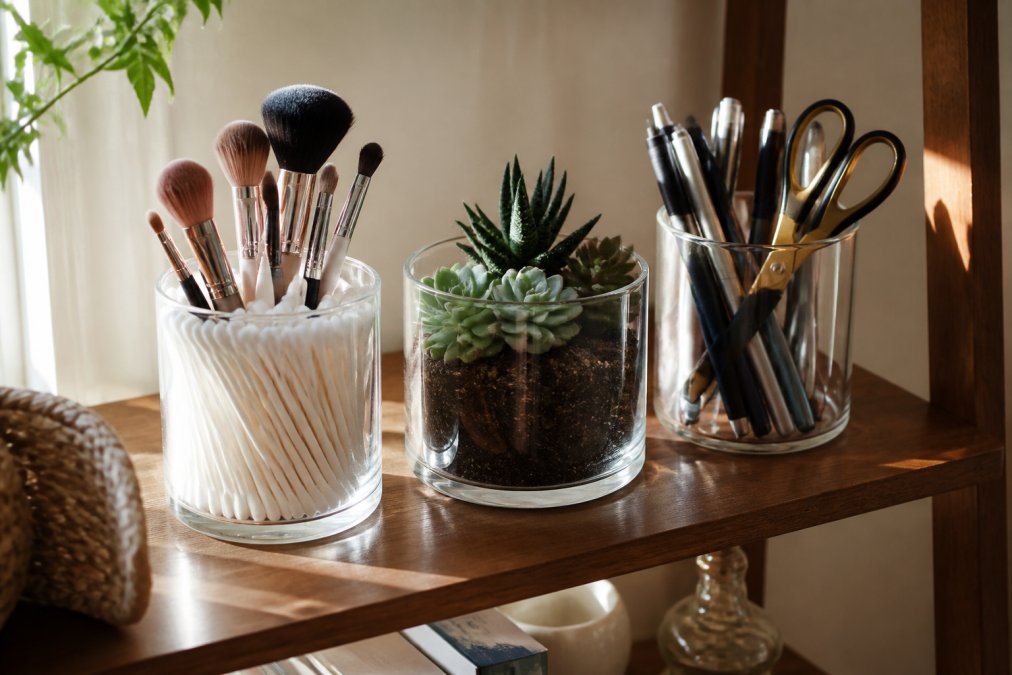
Bathroom storage: A cleaned candle jar is ideal for holding cotton swabs, bobby pins, hair ties, or makeup brushes. Clear glass lets you see what's inside, and the wide opening makes retrieval easy.
Desk and office organization: Use a medium-sized jar for pens, scissors, and markers. Smaller jars work well for paper clips, binder clips, or USB drives, a zero-waste alternative to plastic desk organizers.
Kitchen storage: Dried herbs, spices, loose tea, coffee beans, or small baking supplies fit neatly in candle jars. Ensure the jar is fully sanitized and odor-free before storing anything edible.
| Reuse Idea | Best Jar Size | Room | Prep Needed |
|---|---|---|---|
| Cotton swabs and brushes | Small to medium | Bathroom | Wash and sanitize |
| Pens and scissors | Medium to large | Office/desk | Wash only |
| Dried herbs or spices | Small | Kitchen | Full sanitize |
| Hair ties and pins | Small | Bathroom | Wash only |
| Succulent planter | Medium to large | Any room | Add drainage layer |
| Terrarium | Large | Living room | Add gravel and soil |
Home Decor and Terrariums
A candle jar with clean lines and good glass clarity deserves a visible spot in your home.
Terrariums: Layer small pebbles at the bottom for drainage, add activated charcoal, then potting soil, and finally a small succulent or air plant. Candle jars make excellent mini terrariums because their glass walls show off the layered structure. Closed-lid jars create a self-sustaining humid environment for ferns and moss.
Vases: A tall candle jar holds a small bouquet of wildflowers, dried botanicals, or a single stem beautifully. The weight of the glass keeps it stable.
Ambient lighting: Drop a battery-powered LED tea light into a clean jar for an instant lantern. Add decorative stones or dried lavender for texture.
Seasonal decor: Fill jars with seasonal items, pine cones and cinnamon sticks in autumn, small ornaments in winter, dried florals in spring. Swap contents as seasons change for year-round decoration at no cost.
DIY Candle Refills and Crafting Projects
The most fitting second life for a candle jar is turning it back into a candle. DIY candle making is a growing hobby, and a reused jar is a perfect refillable vessel.
To make a basic soy wax refill:
- Secure a new cotton wick to the jar's center using a small dab of hot glue on the wick tab.
- Use a pencil or chopstick laid across the jar's opening to hold the wick upright.
- Melt soy wax in a double boiler, then remove from heat and let it cool to around 140°F before adding fragrance oil.
- Pour slowly into the jar, leaving a half-inch gap at the top.
- Let it cure for 24 to 48 hours before burning.
As the National Candle Association's candle making safety guidelines recommend, always use wicks sized appropriately for your jar's diameter and never leave melting wax unattended. A jar that originally held a professionally made candle is already sized for the purpose, which takes the guesswork out of your DIY project.
Clean jars also work well for storing homemade bath salts, sugar scrubs, or small craft supplies like buttons, beads, and thread.
Don't Forget the Lids: Upcycling Candle Jar Lids
Most guides focus entirely on the jar and ignore the lid. Metal and wooden lids that come with candle jars are genuinely useful items:
- Coaster: A cork-lined or smooth metal lid makes a perfectly sized coaster for a mug or small glass.
- Mini tray: A wide, flat lid can hold jewelry, a ring dish, or small items on a nightstand.
- Craft base: Glue a small piece of felt to the underside of a metal lid and use it as a palette for watercolors or a mixing surface for paint.
- Propagation station base: Set a small glass of water with a plant cutting on top of a lid to protect your shelf surface.
Throwing away a perfectly functional piece of metal or wood because you've finished the candle inside is waste that's easy to avoid.
Why Reusing Candle Jars Is Good for the Planet
Choosing to reuse candle jars rather than throw them away is a straightforward act of zero-waste living with solid environmental benefits.
Glass is one of the most energy-intensive materials to produce. According to EPA overview of glass recycling and manufacturing impact, manufacturing new glass requires significant energy inputs and generates carbon emissions at every stage. Reusing a glass jar entirely bypasses that cycle. Even recycling still requires energy to melt and reform the glass.
A single candle jar cleaned and used as a storage container for three or four years represents meaningful reduction in material consumption. Multiply that across a household that burns several candles a year, and the impact becomes genuinely significant.
Glass doesn't biodegrade in any practical timeframe, it simply occupies landfill space indefinitely. Reusing it keeps it out of the waste stream entirely.
The sustainability angle also connects to buying better and using longer. Choosing a hand-poured candle in a quality glass jar means you're starting with a vessel worth keeping. Mass-produced candles often use thin, low-quality glass that's harder to clean and less appealing as a reuse candidate.
Frequently Asked Questions
How do you remove stubborn wax residue from glass jars?
The freezer method works best for thick wax residue. Place the jar in the freezer for two hours, then pop the hardened wax out with a butter knife or spoon. For thin film residue left behind, pour boiling water into the jar, let it melt the wax to the surface, then scoop it off once cooled. A cotton swab dipped in isopropyl alcohol handles any remaining oily film. Avoid metal scrapers that can scratch glass.
Is it safe to reuse candle jars for food or drink?
Most candle jars are made from standard soda-lime glass, which is food-safe once properly cleaned. The concern is residual fragrance oils or dye that can seep into porous surfaces. After thorough cleaning with dish soap and isopropyl alcohol, glass jars are generally safe for dry food storage and cold drinks. However, they are not designed for high-heat use like a double boiler or microwave, so skip those applications to avoid cracking.
Can you reuse candle jars to make new candles?
Yes, and it's one of the most satisfying DIY candle projects you can do. Once the jar is fully cleaned and sanitized, it works as a refillable vessel for homemade candles. Make sure the glass is heat-resistant and free of cracks before pouring hot wax. Use a double boiler to melt your wax, secure a new wick with a wick tab at the bottom, and pour slowly. Let the wax cure for at least 48 hours before burning.
What are the best ways to reuse candle jars for home organization?
Cleaned candle jars make excellent storage containers for small items. In the bathroom, they hold cotton swabs, hair ties, or makeup brushes neatly on a counter. On a desk, they corral pens, scissors, or paper clips. In the kitchen, they store dried herbs, spices, or loose tea. Their glass walls make it easy to see contents at a glance, and their original lids keep dust out. Labeling each jar takes the organization one step further.
Finishing a candle and facing an empty jar is a genuinely pleasant problem to have. The jar is already clean-lined, sturdy, and attractive, it just needs a new purpose. Carbondale Candle's hand-poured scented jar candles are crafted with exactly this in mind: premium glass vessels that are worth keeping long after the last burn. Browse the full collection and find your next favorite scent, knowing the jar will earn its place in your home twice over. Get Lit With Us.
This article was written using GrandRanker