
Table of Contents
- Why Non Toxic Candles for Home Use Actually Matter
- Paraffin vs Soy vs Beeswax Candles: Which Wax Is Cleanest
- Clean Burning Candle Ingredients to Look For
- How to Identify Toxic Candle Chemicals Before You Buy
- What Makes a Non Toxic Candle Truly Clean-Burning
- Candle Care Tips for a Longer, Cleaner Burn
- Conclusion
Last Updated: August 24, 2026
Why Non Toxic Candles for Home Use Actually Matter
Most people don't think twice about lighting a candle, but what you can't see in the air matters more than realized. Indoor air is often more polluted than outdoor air, and conventional candles can make that worse.
Non toxic candles are made without petroleum-derived waxes, synthetic fragrance chemicals, or metal-core wicks. They burn cleaner, release fewer airborne irritants, and are a meaningful upgrade for anyone who burns candles regularly. Below, we'll break down exactly what to look for, what to avoid, and how to tell the difference between a genuinely clean candle and one that's just marketed that way.
What Paraffin Wax Releases When It Burns
Paraffin wax is a petroleum byproduct. According to the EPA's guidance on indoor air quality and combustion sources, burning petroleum-based products indoors can release particulate matter and volatile organic compounds that accumulate in enclosed spaces. Paraffin candles produce black soot, visible evidence of incomplete combustion, which settles on walls and furniture but also enters your lungs as fine particles.
The specific compounds released include benzene and toluene, both classified as VOCs. While a single candle burn doesn't release dangerous concentrations, regular use in poorly ventilated rooms adds up over time.
Allergy and Sensitivity Considerations
Many people who report headaches from scented candles assume they're reacting to fragrance. More often, the culprit is the combination of synthetic fragrance chemicals and paraffin combustion byproducts. People with asthma, seasonal allergies, or chemical sensitivities tend to notice the difference immediately when switching to cleaner-burning alternatives.
Common triggers include phthalates, used to make synthetic fragrances last longer, and formaldehyde, released during paraffin combustion. If you've had bad experiences with scented candles, the issue likely wasn't scent itself but the delivery mechanism.
Paraffin vs Soy vs Beeswax Candles: Which Wax Is Cleanest
The wax is the foundation of any candle and where the biggest differences in clean-burning performance show up.
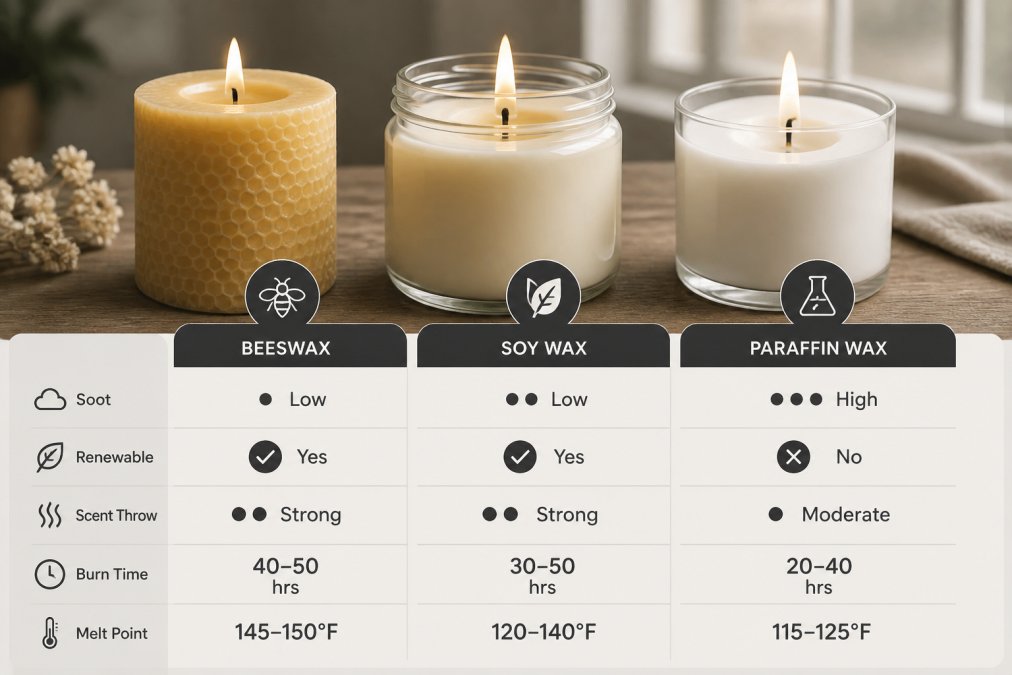
Paraffin wax is the most common candle wax because it's cheap and holds fragrance well. The downside is that it's derived from crude oil refining, produces more soot than natural waxes, and releases more VOCs during combustion. For occasional use in well-ventilated spaces, the risk is low. For daily use in bedrooms or small apartments, it's worth reconsidering.
Soy wax is made from hydrogenated soybean oil, making it renewable and biodegradable. Soy candles burn cooler and slower, producing longer burn times and noticeably lower soot output. The main caveat: not all soy wax is created equal. Some manufacturers blend soy with paraffin to reduce cost. Look for candles labeled "100% soy" rather than "soy blend."
Beeswax is the gold standard for clean-burning candles. It's a natural wax produced by honeybees and burns at a higher temperature than soy or paraffin, allowing naturally strong scent throw without added fragrance. It also produces negative ions when burned, which can help neutralize airborne particulates. Beeswax is typically more expensive, but for people with serious sensitivities, it's the clearest choice.
| Wax Type | Source | Soot Level | Burn Time | Best For |
|---|---|---|---|---|
| Paraffin | Petroleum byproduct | High | Moderate | Budget use, occasional burn |
| Soy | Hydrogenated soybean oil | Low | Long | Everyday home use |
| Beeswax | Natural beehive wax | Very low | Long | Sensitivities, unscented preference |
| Coconut wax | Cold-pressed coconut oil | Low | Long | Luxury candles, strong scent throw |
| Tallow | Rendered animal fat | Low | Moderate | Traditional, minimal processing |
Coconut Wax and Tallow: Two More Options Worth Knowing
Coconut wax is made from cold-pressed coconut oil and is among the cleanest-burning options available. It has excellent scent throw and is sustainably sourced when harvested responsibly, making it a strong choice for eco-conscious buyers.
Tallow is rendered animal fat, typically from beef. It's one of the oldest candle-making materials and burns cleanly with minimal soot. Tallow candles are paraffin-free and biodegradable, worth knowing about if you're looking for a minimally processed, natural option.
Clean Burning Candle Ingredients to Look For
A genuinely clean candle will be transparent about every ingredient. The cleanest candles use a single-origin natural wax, fragrance with essential oils or phthalate-free fragrance oils, and cotton or wood wicks with no metal core.
Essential Oils vs. Synthetic Fragrance Oils
Essential oils are concentrated plant extracts that are natural, biodegradable, and contain no synthetic chemicals. The limitation is potency: they have lower flash points and fade faster than synthetic alternatives, resulting in subtler scent throw.
Synthetic fragrance oils are lab-created scent compounds. Many conventional fragrance oils contain phthalates, used to help scents last longer and bind to wax. According to the National Institute of Environmental Health Sciences' overview of phthalates, phthalates have been linked to hormonal disruption in animal studies.
The good news: phthalate-free fragrance oils exist and work well. When evaluating a candle brand, look for "phthalate-free" and "paraben-free" fragrance claims.
Lead-Free Wicks: Cotton and Wood Wick Options
Wick composition matters more than most buyers realize. Lead was banned from candle wicks in the United States in 2003 by the Consumer Product Safety Commission, but imported candles with metal-core wicks still occasionally appear on the market.
Cotton wicks are braided from natural cotton fibers, sometimes with a paper core for stiffness. They burn cleanly and produce minimal soot when properly trimmed.
Wood wicks are flat or round strips of wood that produce a soft crackling sound when burned. They create a wider melt pool and work well in wider container candles, burning cleanly with no metal components.
How to Identify Toxic Candle Chemicals Before You Buy
The most reliable signal is ingredient transparency. A brand that lists every component, including wax type, fragrance composition, and wick material, is telling you they have nothing to hide.
Watch for these red flags:
- "Fragrance" listed without clarification on phthalate or paraben content
- "Wax blend" without specifying components
- No wick material listed
- "Natural" or "eco-friendly" claims with no certifications or ingredient detail
- Black soot rings around the jar after burning
The phrase "paraffin-free" is meaningful because paraffin is the most common toxic wax type. Similarly, "phthalate-free" and "paraben-free" are specific enough to be verifiable. Vague terms like "clean" or "pure" are marketing language with no regulatory definition.
Third-Party Certifications That Actually Mean Something
Third-party certification is the most objective signal when evaluating candle safety claims. Here are certifications worth looking for, according to the USDA's BioPreferred program for biobased products:
- USDA Certified Biobased: Verifies that a product contains a specified percentage of biological ingredients rather than petroleum-derived ones.
- MADE SAFE: A rigorous third-party certification that screens products against over 6,500 substances of concern.
- EWG Verified: The Environmental Working Group's verification program evaluates products against their Skin Deep database for ingredient safety.
Not every quality candle brand carries these certifications, especially small-batch makers. In those cases, full ingredient transparency and direct communication from the brand are strong alternatives.
What Makes a Non Toxic Candle Truly Clean-Burning
A clean-burning candle produces minimal soot, releases no harmful VOCs, and uses ingredients safe for regular indoor use. The combination of natural wax, phthalate-free fragrance, and a lead-free wick is the baseline.
Hand-poured, small-batch candles tend to burn more cleanly than mass-produced alternatives because the maker has direct control over every variable. Wick sizing, fragrance load, and wax temperature during pouring all affect how a candle burns.
A properly formulated candle should develop a melt pool that reaches edge to edge within the first two to three hours of burning. If the melt pool stays narrow and tunnels down the center, the wick is likely undersized, causing incomplete combustion and uneven fragrance release. Food-grade and cosmetic-grade waxes are another marker of quality, indicating higher purity than industrial-grade alternatives.
Candle Care Tips for a Longer, Cleaner Burn
Even the best non toxic candle burns poorly without proper maintenance.
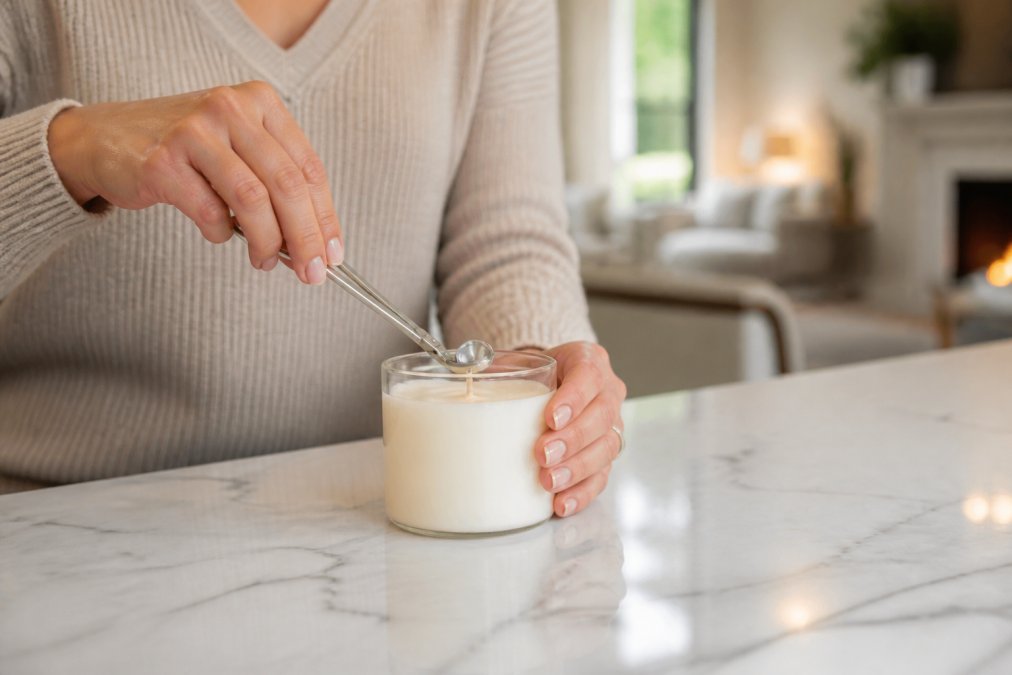
Trim the wick before every burn to about 6 millimeters. A wick that's too long creates excess soot and burns through wax too quickly.
Let the candle reach a full melt pool on the first burn. The first burn sets the "memory" of the candle. If you extinguish it before the melt pool reaches the edges, it will tunnel on every subsequent burn.
Keep burn time under four hours per session. Extended burns cause the wick to mushroom at the tip, increasing soot output and overheating the vessel.
Store candles away from direct sunlight to preserve fragrance and prevent discoloration.
Stop burning when about 1.25 centimeters of wax remains to protect the surface and prevent overheating.
| Care Habit | Why It Matters | How Often |
|---|---|---|
| Trim wick to 6mm | Reduces soot, controls flame size | Before every burn |
| Allow full melt pool | Prevents tunneling | Every burn |
| Limit burn to 4 hours | Prevents mushrooming and overheating | Each session |
| Store away from sunlight | Preserves fragrance and color | Ongoing |
| Stop at 1.25cm wax remaining | Protects surface, prevents overheating | Final burns |
As the National Candle Association's candle safety guidelines notes, proper wick maintenance and burn habits are the most effective ways to reduce indoor soot and maximize candle performance.
Choosing non toxic candles comes down to knowing what's actually in the candle you're burning. The combination of synthetic fragrances, paraffin wax, and metal-core wicks found in mass-market candles is worth avoiding for anyone who burns candles regularly. Carbondale Candle hand-pours every candle in small batches, using premium ingredients designed for a cleaner, more consistent burn. If you're ready to make the switch to candles you can actually feel good about, get lit with us and find a scent worth burning.
Frequently Asked Questions
What is the healthiest candle to burn in your house?
The healthiest options use natural, paraffin-free waxes like beeswax, coconut wax, or soy wax paired with lead-free cotton or wood wicks. Beeswax is often cited as the cleanest choice because it burns slowly and is naturally scented. For fragrance, candles scented with pure essential oils avoid the phthalates and synthetic chemicals found in many conventional fragrance oils. Look for hand-poured, small-batch candles that disclose all ingredients on the label.
What ingredients should I avoid in scented candles?
Avoid paraffin wax, which is petroleum-derived and releases VOCs and soot when burned. Steer clear of synthetic fragrance oils that contain phthalates and parabens, both of which are linked to hormone disruption. Metal-core wicks, especially older lead-core versions, are another red flag. Also watch for labels that list only 'fragrance' without disclosing whether the formula is phthalate-free, as that single word can hide dozens of undisclosed chemicals.
Are essential oil candles safer than fragrance oil candles?
Generally, yes. Essential oils are plant-derived and do not contain synthetic phthalates or parabens. However, some essential oils can irritate airways at high concentrations, so ventilation still matters. Synthetic fragrance oils vary widely, some are formulated to be phthalate-free and paraben-free, making them safer than standard fragrance blends. When shopping for non toxic candles, check whether the brand explicitly states phthalate-free and paraben-free on the label or product page.
Do non-toxic candles produce soot?
All candles produce some soot, but the amount varies significantly by wax type and wick condition. Paraffin candles produce the most soot. Beeswax, coconut wax, and soy wax candles burn cleaner and produce far less black residue. Keeping your wick trimmed to about 6 mm before each burn, avoiding drafts, and allowing a full melt pool to form on the first burn all reduce soot output regardless of wax type.
This article was written using GrandRanker