
Table of Contents
- How Synthetic Fragrance Oils Trigger Headaches
- Paraffin vs. Soy Wax: Health Effects Compared
- Common Symptoms of Candle-Induced Headaches
- Indoor Air Quality and Ventilation Best Practices
- How to Choose Non-Toxic Candles for Home Use
- How to Choose Headache-Free Candles: A Practical Guide
- Conclusion: Enjoy Candles Without the Pain
Last Updated: August 29, 2026
How Synthetic Fragrance Oils Trigger Headaches
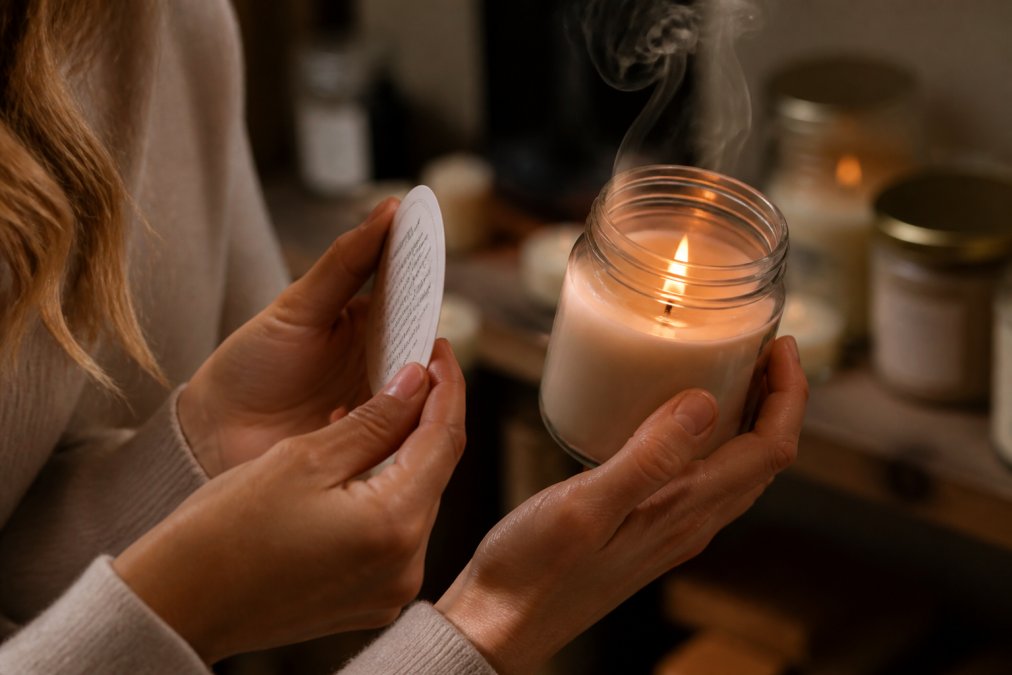
Scented candles cause headaches through a combination of chemical exposure and neurological sensitivity that most people don't fully understand. When you light a scented candle, the fragrance oils release volatile organic compounds (VOCs) into your home's air. These airborne chemicals don't just smell pleasant, they interact with your body's sensory systems in ways that can trigger pain, dizziness, and nausea.
The culprit isn't always the scent itself. Many commercial fragrance blends contain synthetic compounds designed to smell appealing and last longer than natural alternatives. These synthetic fragrances often include phthalates, which are chemical additives used to make scents cling to fabrics and linger in the air. When inhaled, phthalates can irritate respiratory passages and trigger inflammatory responses that lead directly to headaches (peer-reviewed research).
The Role of Volatile Organic Compounds
Volatile organic compounds are carbon-based chemicals that evaporate easily at room temperature. When you burn a scented candle, fragrance molecules enter the air as VOCs. Some of these compounds, like benzene and toluene, are known irritants that can accumulate in poorly ventilated spaces (the EPA). Your body detects these airborne chemicals through olfactory receptors in your nasal passages, which send signals directly to your brain's limbic system and trigeminal nerve.
The concentration matters significantly. A single candle burning in a large, well-ventilated room produces fewer irritating compounds than the same candle in a small, closed bedroom. People with existing sensitivities to airborne chemicals often experience headache onset within 15 to 30 minutes of exposure (peer-reviewed research). The longer a candle burns, the higher the VOC concentration becomes, which explains why some people feel fine initially but develop symptoms after an hour or two of exposure.
Phthalates and Health Impact
Phthalates are plasticizers added to fragrances to extend their longevity. They're not listed on candle labels because they're considered part of the fragrance formulation itself. When phthalates are inhaled, they can trigger respiratory irritation and systemic inflammatory responses. Some research suggests chronic exposure to phthalates may contribute to respiratory and endocrine issues, though the effects of short-term candle exposure remain understudied.
The problem intensifies in homes where multiple scented products burn simultaneously, candles, air fresheners, diffusers. Each product adds its own chemical load to the air. People sensitive to phthalates often report that switching to phthalate-free candles eliminates their headaches entirely. This direct cause-and-effect relationship suggests the chemical itself, not merely the scent, drives the reaction.
How Scents Trigger the Trigeminal Nerve
Your trigeminal nerve is the largest cranial nerve and plays a crucial role in how you experience scents. Unlike your olfactory system, which simply identifies smells, the trigeminal nerve detects irritation and chemical intensity. Strong fragrances, especially synthetic ones, stimulate trigeminal nerve endings in your nasal passages and throat. This stimulation can trigger pain signals that manifest as headaches, sinus pressure, or facial pain.
Some people's trigeminal nerves are more reactive than others. This explains why one person can enjoy a heavily scented candle while their partner experiences immediate discomfort. Individuals with migraine disorders, asthma, or chronic sinus conditions often have heightened trigeminal sensitivity. For these people, synthetic fragrance exposure can reliably trigger headaches regardless of the scent type.
Paraffin vs. Soy Wax: Health Effects Compared
The wax type matters as much as the fragrance when it comes to candle-induced headaches. Paraffin wax is a petroleum byproduct that releases particulate matter and soot when burned. Soy wax and other natural alternatives burn cleaner and produce fewer airborne irritants. Understanding this distinction helps you choose candles that won't compromise your indoor air quality.
Soot and Particulate Matter from Paraffin
Paraffin candles produce visible soot, that black residue you see on candle jars and ceiling corners. This soot consists of tiny particulate matter suspended in the air you breathe. Inhaling particulate matter irritates your respiratory system and can trigger inflammatory responses that lead to headaches. The smaller the particles, the deeper they penetrate into your lungs and the more systemic inflammation they cause.
Paraffin also releases more VOCs than natural waxes because of how it's processed and formulated. The combination of soot, particulate matter, and elevated VOC levels creates a triple threat for people prone to headaches. Switching from paraffin to a cleaner-burning wax often produces noticeable improvements in respiratory comfort and headache frequency.
Why Natural Wax Alternatives Matter
Soy wax, beeswax, and coconut wax burn at lower temperatures and produce significantly less soot than paraffin. They also hold fragrance differently, typically requiring less synthetic fragrance load to achieve the same scent throw. Natural waxes tend to burn more slowly and evenly, which reduces the overall chemical release into your home's air.
Beeswax is particularly noteworthy because it naturally purifies air by releasing negative ions that attract airborne pollutants. While the effect is modest, it works in your favor. Soy wax offers a middle ground, it's sustainable, burns cleanly, and works well with both synthetic and essential oil fragrances. When choosing candles, prioritizing natural wax over paraffin is one of the most direct ways to reduce headache risk.
Common Symptoms of Candle-Induced Headaches
Recognizing candle-induced headaches helps you identify whether scented candles are the source of your discomfort. Symptoms typically develop gradually as fragrance concentration builds in your space. The headache often feels different from migraines or tension headaches, it's frequently accompanied by other sensory symptoms that point directly to chemical exposure.
Common symptoms include:
- Throbbing or pressure sensation in the temples or forehead
- Sinus pressure and facial pain
- Dizziness or lightheadedness
- Nausea or queasiness
- Nasal congestion or postnasal drip
- Difficulty concentrating or mental fog
- Irritated eyes or throat
- Sensitivity to light or sound
The timing is telling. If your headache begins within 30 minutes of lighting a scented candle and resolves within an hour of extinguishing it, fragrance exposure is almost certainly the cause. Some people experience delayed symptoms that develop over several hours of exposure, making the connection less obvious.
Indoor Air Quality and Ventilation Best Practices
Proper ventilation is your most powerful tool for enjoying scented candles without headaches. Even high-quality, non-toxic candles release fragrance compounds into the air. Managing those compounds through ventilation prevents buildup that triggers symptoms.

Implement these ventilation strategies:
- Open a window in the room where you're burning a candle, even just slightly
- Use exhaust fans in bathrooms or kitchens if you're burning candles nearby
- Allow cross-ventilation by opening windows on opposite sides of your home
- Run air purifiers with HEPA and activated carbon filters to capture particulate matter and VOCs
- Avoid burning candles in small, enclosed spaces like closets or bathrooms without ventilation
- Limit burn time to 3-4 hours at a stretch, then allow the air to clear for at least 30 minutes
- Never burn multiple scented candles simultaneously in the same room
The goal isn't to eliminate fragrance, it's to prevent concentration buildup. A single well-made candle in a ventilated space produces far fewer symptoms than multiple candles in a sealed room. If you're sensitive to fragrance, treat ventilation as a non-negotiable requirement rather than an optional nicety.
How to Choose Non-Toxic Candles for Home Use
Selecting non-toxic candles requires understanding what to look for on labels and what questions to ask before buying. Transparency in ingredient disclosure is your best indicator of a candle maker's commitment to safety and quality.
Reading Labels for Ingredient Transparency
Quality candle makers list their ingredients clearly. Look for candles that specify:
- Wax type (soy, beeswax, coconut, or blends of these)
- Fragrance source (essential oils, fragrance oils, or blends)
- Whether phthalates are explicitly excluded
- Whether the candle is made with natural or synthetic fragrance
Vague labels that say "fragrance blend" without further detail are a red flag. Reputable makers provide transparent ingredient information because they understand that consumers deserve to know what they're bringing into their homes. If a candle maker won't disclose ingredients, that's a signal to look elsewhere.
Pay attention to certifications. Some candles carry third-party certifications indicating they've been tested for harmful chemicals. While not every quality candle has formal certification, those that do provide extra assurance. Check for claims like "phthalate-free," "lead-free wick," and "non-toxic fragrance."
What Makes a Candle Truly Headache-Free
A truly headache-free candle combines several elements: natural wax, clean-burning wick, minimal fragrance load, and transparent ingredient disclosure. No single factor guarantees safety, it's the combination that matters.
Natural wax (soy, beeswax, coconut) burns cleaner than paraffin. A cotton or wood wick burns more completely without excess soot. Moderate fragrance load means the candle smells pleasant without overwhelming your air quality. Transparency means you can verify that synthetic fragrances don't contain phthalates and that the maker stands behind their product.
Carbondale Candle's hand-poured scented jar candles prioritize these elements. By controlling the wax blend, fragrance formulation, and wick selection, hand-poured candles can contribute to a more comfortable experience. The craftsmanship means each candle is made with care.

How to Choose Headache-Free Candles: A Practical Guide
Making smart candle choices involves testing before committing to regular use and understanding your own sensitivities. This practical approach prevents wasted money and repeated headache episodes.
Testing Scent Throw Before Commitment
Scent throw is the intensity and distance a candle's fragrance travels through your space. High scent throw isn't always better, it often correlates with higher fragrance concentration and greater headache risk for sensitive people. Before purchasing a candle, test it in a controlled way.
If buying online, start with a single candle rather than a multi-pack. Light it for 30 minutes in a well-ventilated room and pay attention to whether you develop any symptoms. If you feel fine after 30 minutes, extend to an hour. This gradual testing approach reveals your personal tolerance without committing to large quantities.
If shopping in person at a candle retailer, ask to smell the candle before purchase. Close your eyes and notice whether the scent feels pleasant or overwhelming. An overwhelming scent in an open shop, where the air circulates freely, will feel much more intense in your bedroom with the door closed. Err on the side of subtlety.
The 3-Hour Rule and Burn Time
The 3-hour rule is a practical guideline: limit continuous candle burning to 3 hours maximum, then extinguish and allow your space to air out for at least 30 minutes before relighting. This approach prevents fragrance concentration from building to levels that trigger headaches in sensitive individuals.
Many people assume longer burn time means better value, but for headache-prone individuals, shorter, interrupted burn sessions are safer. A candle that burns for 30 minutes three times a day produces fewer symptoms than the same candle burning continuously for 90 minutes.
Track your own patterns. Some people can burn candles all day without issue. Others develop symptoms after 45 minutes. Your personal tolerance determines the burn schedule that works for you. Respecting that limit prevents unnecessary suffering and lets you actually enjoy the ambiance and fragrance without pain.
Conclusion: Enjoy Candles Without the Pain
Scented candles don't have to cause headaches. Understanding the chemical mechanisms, synthetic fragrances, volatile organic compounds, particulate matter, and trigeminal nerve sensitivity, gives you the knowledge to choose products and practices that work for your body.
The combination of natural wax, transparent ingredient disclosure, proper ventilation, and reasonable burn time creates an environment where candles enhance your home without triggering pain. Carbondale Candle's hand-poured scented jar candles are crafted with these principles in mind, using quality wax blends and fragrance formulations designed to minimize irritation while delivering genuine scent satisfaction.
Start by testing a single candle in a ventilated space. Pay attention to your body's response. If you experience symptoms, try opening a window or reducing burn time before abandoning candles entirely. Most headache-prone individuals find that switching to natural wax candles with phthalate-free fragrance and maintaining basic ventilation solves the problem completely.
The path to enjoying scented candles without headaches starts with understanding what triggers your symptoms. Whether it's synthetic fragrance compounds, particulate matter from paraffin wax, or poor ventilation, each factor is controllable. Carbondale Candle's commitment to hand-poured quality and transparent ingredients means you can enjoy beautiful home fragrance with confidence. Get Lit With Us and discover candles designed to enhance your space, not compromise your comfort.
Frequently Asked Questions
Q: Is it normal for scented candles to cause headaches?
A: Yes, many people experience headaches from scented candles. Synthetic fragrance oils release volatile organic compounds (VOCs) and phthalates that can trigger migraines and tension headaches, especially in poorly ventilated spaces. If you're sensitive to scents, the trigeminal nerve, which processes smell sensations, can become irritated, leading to pain. Non-toxic candles with essential oils and natural wax alternatives cause fewer reactions for most people.
Q: What's the difference between paraffin and soy wax for headache prevention?
A: Paraffin wax, a petroleum byproduct, releases more soot and particulate matter when burned, increasing airborne pollutants that irritate airways and trigger headaches. Soy wax and other natural alternatives burn cleaner with fewer emissions. If you're prone to headaches, switching to soy or beeswax candles can reduce symptoms. The wax type matters as much as the fragrance when choosing headache-free candles.
Q: How can I tell if a candle is truly non-toxic?
A: Look for labels listing the wax type (soy, beeswax, coconut) and fragrance source (essential oils vs. synthetic). Transparent ingredient lists indicate the maker's confidence in their product. Avoid candles with phthalates or synthetic fragrance loads that seem overwhelming. Hand-poured, artisanal candles often disclose their ingredients more openly than mass-produced options, making it easier to choose non-toxic candles for home use.
Q: What's the 3-hour rule for candles?
A: The 3-hour rule suggests burning candles for no more than 3 hours at a time before extinguishing them. This prevents excessive soot buildup, reduces VOC accumulation in your space, and gives your olfactory system a break. Limiting burn time also ensures even wax melting and prevents tunneling. Combined with proper ventilation, following this rule significantly reduces headache risk from scented candles.
This article was written using GrandRanker