
Table of Contents
- What Makes Candles Expensive in the First Place
- Why Artisan Candles Cost More Than Mass-Produced Options
- Wax Quality and Burn Performance: Paraffin vs. Soy vs. Coconut
- Benefits of Soy Wax Candles and Premium Fragrance Oils
- Scent Throw and Fragrance Load: Cold Throw vs. Hot Throw
- The Cost-Per-Hour Reality: Are Expensive Candles Worth It?
- Health, Safety, and Hidden Costs of Low-Quality Candles
- Conclusion
- Frequently Asked Questions
Last Updated: September 4, 2026
What Makes Candles Expensive in the First Place
Are expensive candles actually better? It's a fair question when you can grab a three-wick candle at a big-box store for less than a nice sandwich. The price difference isn't random. It comes down to what's inside the jar, how it was made, and who made it.
Here's the short version: expensive candles cost more because they use higher-grade materials, more fragrance oil, and human labor instead of assembly lines. That doesn't automatically make every pricey candle worth it. But once you understand where the money goes, you'll know exactly what you're paying for. At Carbondale Candle, we've spent years hand-pouring small batches.
A candle's price tag reflects four things: the wax, the fragrance load, the wick, and the vessel. Cheap candles cut corners on all four. Premium ones don't.
Why Artisan Candles Cost More Than Mass-Produced Options
Artisan candles cost more because someone physically made them. That's the simplest explanation for why artisan candles cost more, and it's the one most guides skip. Mass-produced candles pour hundreds of identical jars an hour with automated equipment. A hand-poured candle requires a person to measure, melt, pour, and finish each jar.
Labor isn't the only factor. Artisan makers typically buy wax in smaller quantities, which costs more per pound. They also tend to use higher-quality fragrance oils and test each batch for a consistent burn. These costs add up quickly.
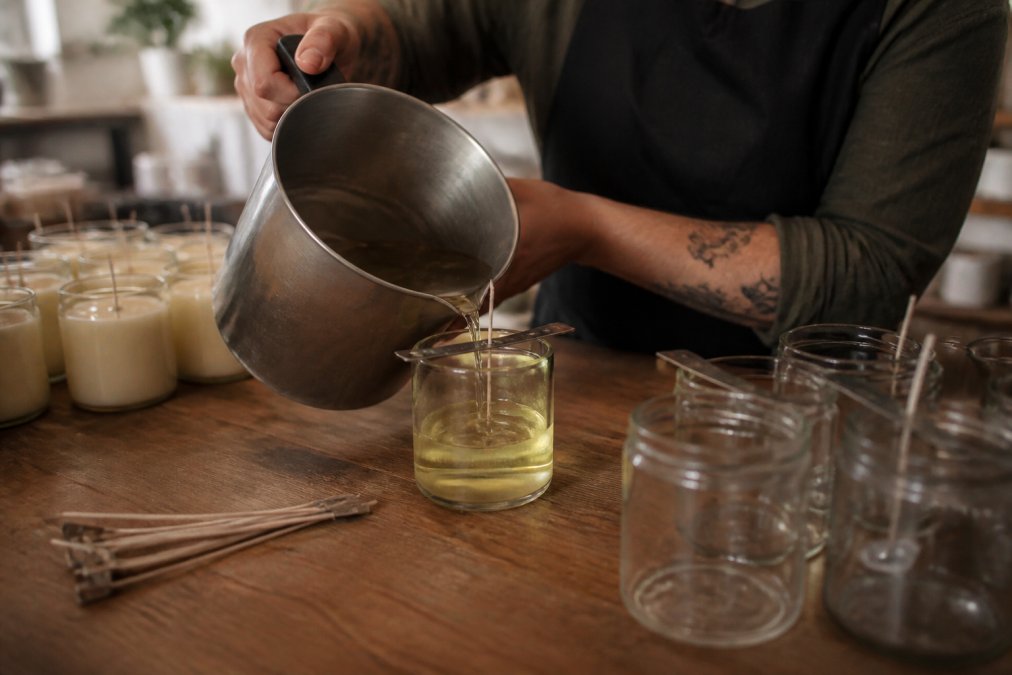
What you're really paying for is quality control. A mass-produced candle might have uneven fragrance distribution or a wick that tunnels. An artisan candle gets tested and adjusted before it ever reaches your shelf. That attention to detail is the entire reason artisan candles justify their higher price point.
Wax Quality and Burn Performance: Paraffin vs. Soy vs. Coconut
The wax is the foundation of the candle, and it's also where cheap brands cut the most corners. Paraffin wax is a petroleum byproduct. It's cheap, it holds fragrance reasonably well, and it's what most budget candles use. Soy wax comes from soybean oil, burns cleaner, and costs more to source. Coconut wax is the premium option: it burns slowly, has excellent scent throw, and is the most expensive of the three.
For anyone asking are expensive candles actually better, the wax comparison is the strongest evidence that yes, they often are. A candle's melt pool and burn time depend heavily on wax quality. Lower-grade paraffin can produce more soot and burn faster, while a well-formulated soy or coconut blend delivers a cleaner, longer burn (the EPA).
How to Identify High Quality Candle Wax
You can't always tell wax quality by looking at it, but there are clues. High quality candle wax has a smooth, even surface without large cracks or air pockets. When lit, it should form a full melt pool across the top of the jar within the first hour or two, not a narrow tunnel down the middle.
Another sign: the wax should be opaque and creamy, not greasy or translucent. And check the label or product description. Brands that use premium wax usually say so. If a candle only lists "paraffin blend" without specifics, that's a signal about how to identify high quality candle wax, and what's not in the jar.
Benefits of Soy Wax Candles and Premium Fragrance Oils
The benefits of soy wax candles start with how they burn. Soy wax has a lower melting point than paraffin, which means it burns at a cooler temperature. That translates to a slower burn and a longer-lasting candle. It also produces noticeably less soot, which keeps your walls, curtains, and ceilings cleaner.
Soy wax is also a natural, renewable resource, which appeals to buyers who want a more sustainable option for their home. But wax alone doesn't make a great candle. The fragrance oil matters just as much. Premium fragrance oils are more concentrated and use higher-quality aroma compounds than the diluted oils found in budget candles.
Scent Throw and Fragrance Load: Cold Throw vs. Hot Throw
Scent throw is the term candle makers use to describe how well a candle releases its fragrance. Cold throw is the scent you smell when the candle is unlit. Hot throw is the fragrance released while burning. Both matter, but hot throw is what fills your room.
The fragrance load, or the percentage of fragrance oil in the wax, directly determines how strong the hot throw will be. A budget candle might use 3 to 5 percent fragrance oil. A premium candle often uses 8 to 12 percent (peer-reviewed research). That difference is why one candle makes your whole living room smell like vanilla and another only smells when you put your nose right over the jar.
If you've bought candles online and been disappointed by weak scents, the fragrance load is usually the culprit. At Carbondale Candle, our 10oz Frosted Jar Candle, Scented uses a generous fragrance load so the scent fills the space, not just the immediate area around the flame.

The Cost-Per-Hour Reality: Are Expensive Candles Worth It?
Here's where the math gets interesting. A budget candle might cost $8 and burn for 25 hours. That's about 32 cents per hour of burn time. A premium candle at $20 might burn for 50 hours or more, putting it around 40 cents per hour. The premium candle costs more upfront, but the cost-per-hour difference is smaller than you'd expect.
The real gap shows up in how they burn. A well-made candle with a proper wick burns evenly to the edges of the jar, using all the wax. A cheap candle that tunnels leaves wax wasted on the sides, cutting its effective burn time in half. That $8 candle might only give you 12 usable hours, making it more expensive per hour than the premium option.
| Candle Type | Price | Approx. Burn Time | Cost Per Hour | Likely Outcome |
|---|---|---|---|---|
| Budget candle | $8.00 | 25 hours | $0.32 | May tunnel, wasting wax |
| Mid-range candle | $15.00 | 35 hours | $0.43 | Decent burn, moderate scent |
| Premium candle | $20.00 | 50+ hours | $0.40 or less | Even burn, strong scent throw |
Where Quality Plateaus: The Diminishing Returns Price Point
Not all price increases translate to performance gains. Most candle experts and makers agree that the sweet spot for quality-to-value sits between $15 and $25 for a standard 10-15 ounce candle. Within this range, you're typically getting:
- A wax blend (soy, coconut, or high-quality paraffin) that burns evenly
- A fragrance load between 8 and 12 percent
- A properly sized wick that prevents tunneling
- Transparent ingredient labeling
Once you exceed $30-$40 for a similar-sized candle, you're often paying for packaging design, brand prestige, or limited-edition scents rather than measurable improvements in burn performance or fragrance quality. A $35 luxury candle and a $20 artisan candle may burn identically if both use the same wax type and fragrance concentration. The difference lies in the vessel, the label design, and the brand story, not the candle itself.
How to Spot Overpaying for Branding
To identify when price reflects branding rather than quality, ask these questions:
- Is the wax type specified? Brands that hide behind vague terms like "premium wax blend" without listing soy, coconut, or paraffin percentages are often obscuring lower-quality ingredients.
- Is the fragrance load disclosed? Transparent makers state their fragrance percentage. If it's not mentioned, assume it's on the lower end (3-6 percent).
- Does the price match the vessel? A $40 candle in a basic glass jar is likely overpriced. A $40 candle in hand-blown glass or a luxury container is more justified.
- Are there third-party reviews on burn time? User feedback on actual burn hours (not manufacturer claims) reveals whether the candle delivers on its promise.
The math is simple: a hand-poured candle with quality ingredients at $18-$22 typically offers better value than a mass-produced luxury candle at $45. The former prioritizes performance; the latter prioritizes perception.
Health, Safety, and Hidden Costs of Low-Quality Candles
The hidden cost of cheap candles isn't just wasted money. It's what they release into your air. Lower-grade paraffin wax can emit more volatile organic compounds (VOCs) and soot when burned. Some budget candles also use synthetic fragrances that contain phthalates, which some people find irritating. The Environmental Protection Agency's guidance on indoor air quality notes that indoor pollutants can build up, and candles are one source worth considering.
What the Science Shows: Soot and Emissions Data
While most candle manufacturers don't publish third-party lab results, independent testing by candle researchers and consumer groups has revealed measurable differences in emissions between wax types:
- Paraffin wax candles typically produce more soot (black particulate matter) than soy or coconut alternatives, especially when burned for extended periods or in poorly ventilated spaces. This soot accumulates on walls, ceilings, and furnishings over time.
- Soy and coconut wax candles produce significantly less soot due to their cleaner combustion profile. They also tend to release lower levels of volatile organic compounds during burning.
- Wick quality matters as much as wax. Lead-core wicks (now banned in the U.S. for consumer candles) and improperly sized wicks produce excess soot. Premium candles use cotton or wood-core wicks that burn more cleanly.
The practical impact: If you burn a low-quality paraffin candle for 3 hours daily in a bedroom, you may notice black residue on the ceiling or walls within a few weeks. A premium soy or coconut candle burned under the same conditions produces minimal visible soot.
Fragrance Oil Sourcing and Synthetic vs. Natural Claims
Not all fragrance oils are created equal, and marketing claims often obscure the difference:
- Synthetic fragrance oils dominate the candle industry because they're cheaper and more stable than essential oils. They're not inherently harmful, but lower-quality synthetics may contain phthalates (chemicals used to make scents last longer) or other compounds that trigger headaches or respiratory irritation in sensitive individuals.
- Phthalate-free fragrance oils are now standard in reputable brands, but budget candles may still use older formulations. Check the label or product description for explicit "phthalate-free" claims.
- Essential oil-infused candles are marketed as "natural," but most premium candles use a blend of essential oils and synthetic fragrance compounds. Pure essential oil candles are rare and expensive because essential oils have a lower flash point and burn off quickly, reducing scent throw.
The key distinction: A candle labeled "made with essential oils" may contain only 5-10 percent essential oil mixed with synthetic fragrance. A truly natural candle would cost $40+ for a small jar and wouldn't throw scent as effectively.
Real-World Health Considerations
That's not to say all paraffin is dangerous. Many reputable brands use well-refined paraffin that burns cleanly. But if you're sensitive to scents, prone to headaches, or have respiratory concerns, the ingredients matter. Premium candles often advertise phthalate-free fragrance oils and lead-free wicks for a reason.
Non-toxic, clean-burning candles aren't just a wellness trend. They're a practical choice for anyone who burns candles regularly in their home. A candle that burns cleanly and evenly also lasts longer, which brings you back to that cost-per-hour math. Paying a bit more for a cleaner burn saves money over time while protecting your indoor air quality and reducing the need for ceiling and wall touch-ups.
Conclusion
The answer to are expensive candles actually better comes down to what you're buying. A well-made candle with quality wax, a strong fragrance load, and a proper wick genuinely outperforms a budget candle on burn time, scent, and cleanliness. The cost-per-hour difference is often negligible, and the experience is far superior.
The trick is knowing when a high price is justified and when it's just branding. Look for transparency about ingredients, hand-poured craftsmanship, and a reasonable price for the quality. That's exactly what Carbondale Candle offers: premium, hand-poured candles that enhance your home's ambience without the luxury markup. Whether you're treating yourself or searching for a thoughtful gift, our personalized options and 10oz Frosted Black Jar Candle deliver the scent throw and even burn that cheap candles can't match. Get Lit With Us and experience the difference a hand-poured candle makes.

Frequently Asked Questions
Is it worth buying expensive candles?
Yes, if you prioritize scent throw, burn time, and ingredient quality. Expensive candles typically use higher fragrance oil concentration, resulting in stronger hot throw and cold throw. Premium wax blends like soy or coconut burn more evenly, reducing tunneling and wasted wax. Hand-poured artisan candles also offer customization and unique scents mass-produced options don't. However, the value depends on your priorities, if you just want ambient scent, a $15 candle may satisfy you.
What is the difference between cheap and expensive candles?
The main differences are wax composition, fragrance load, wick quality, and vessel design. Expensive candles typically use soy, coconut, or beeswax blends that burn cleaner and longer, while cheap candles rely on paraffin wax. Premium options contain a higher fragrance oil concentration versus budget candles, delivering stronger scent throw. Expensive candles use lead-free cotton or wood wicks and quality glass jars designed for even burn pools. Artisan candles are hand-poured with attention to curing time, while mass-produced options prioritize speed and cost reduction.
Do expensive candles burn longer than cheap ones?
Generally yes. Premium soy and coconut wax blends burn at slower rates than paraffin, extending burn time in many cases. A hand-poured 15oz candle with quality wax may burn for a longer duration, while a budget paraffin candle of similar size might burn for a shorter duration. Cost-per-hour becomes more favorable with expensive candles when you factor in stronger scent throw, you need less burn time to fill a room. However, burn time also depends on wick quality, room size, and how often you trim the wick.
How can I tell if a candle is high quality before buying?
Check the wax composition, soy, coconut, and beeswax blends indicate quality over paraffin. Look for fragrance load information. Verify the wick material (lead-free cotton or wood wicks are better than paper or unknown materials). Examine the vessel, thick, quality glass suggests durability. Read reviews mentioning scent throw, burn pool evenness, and whether the candle tunnels. Hand-poured artisan candles often list curing time and ingredient sourcing. Avoid candles with vague ingredient lists or no mention of fragrance type (essential oils vs. synthetic fragrance).
This article was written using GrandRanker