
Table of Contents
- What Makes a Scented Candle Natural
- Wax Types: Soy, Beeswax, Coconut, and Beyond
- Non-Toxic Candles for Home Use: What to Look For
- Fragrance Oils vs. Essential Oils: Understanding the Difference
- Phthalate-Free Candle Fragrance and Other Harmful Chemicals
- How to Identify Natural Candles and Spot Greenwashing
- Frequently Asked Questions
Last Updated: September 3, 2026
What Makes a Scented Candle Natural
A natural scented candle is made from plant-based or animal-derived waxes without petrochemical additives, paired with fragrance sources free of synthetic chemicals like phthalates. The wax carries the scent, the wick burns it, and every component matters for indoor air quality.
Most mass-produced candles use paraffin wax, a petroleum byproduct that releases volatile organic compounds and soot when burned (the EPA). Natural alternatives like soy, beeswax, and coconut burn cleaner and produce less soot.
Fragrance choice is equally critical. Essential oils smell authentic but don't throw scent effectively across rooms. Fragrance oils are synthetic but engineered to distribute evenly throughout melted wax. The best natural candles use both strategically rather than choosing between performance and clean ingredients.
Lead-free cotton wicks are standard for natural candles. They burn slower, produce less soot, and don't release toxic metals into the air. Understanding natural candles means evaluating the entire formula, a candle with natural wax but phthalate-laden fragrance isn't actually cleaner.
Wax Types: Soy, Beeswax, Coconut, and Beyond
Each natural wax type has distinct burn characteristics, scent throw, and environmental implications.
Soy wax comes from hydrogenated soybean oil. It's renewable, burns 30-50% longer than paraffin, and holds fragrance well. Most soybeans are genetically modified and heavily sprayed with herbicides, so look for non-GMO options if environmental impact matters. Soy wax produces less scent throw than some alternatives.
Beeswax is the gold standard for natural candle makers. It burns 5-7 times longer than paraffin and releases negative ions when burning, which some claim purifies air quality. The downside: beeswax costs significantly more and raises ethical questions about bee farming practices.
Coconut wax is increasingly popular because it's sustainable and burns cleanly. Made from coconut meat, it blends well with other waxes and burns evenly while holding fragrance effectively. Coconut farming typically uses less pesticide and water than soy production.
Blended waxes combine two or more natural waxes to optimize performance. A soy-coconut blend captures soy's burn time with coconut's clean burn. Many premium makers use blends because a single wax rarely delivers excellent scent throw, long burn time, even melting, and affordable pricing simultaneously.
Palm wax is controversial. While plant-based, palm oil production drives deforestation in Southeast Asia. Avoid it unless explicitly labeled "sustainable, certified palm wax."
Wax choice directly impacts tunneling, where only the center melts, wasting wax on the sides. Soy and coconut wax have lower melting points and tunnel more easily with small wicks. Beeswax resists tunneling because it melts at higher temperatures.
Non-Toxic Candles for Home Use: What to Look For
Non-toxic candles require checking multiple ingredients. Start with the wick: lead-free cotton or cotton-core wicks are essential. Some manufacturers use zinc or other metals to help wicks stand upright; when these burn, metal particles enter your air. Quality natural candles state "lead-free" and "cotton" on the label.
Examine the wax source next. Paraffin wax releases benzene and toluene when burned, volatile organic compounds that accumulate in your bloodstream (atsdr.cdc.gov). Soy, beeswax, and coconut wax don't produce these compounds. If a candle doesn't specify the wax type, it's almost certainly paraffin.
Fragrance is where most people get tripped up. "Made with essential oils" sounds natural but doesn't guarantee non-toxicity. Many candles blend essential oils with synthetic fragrance oils containing phthalates, chemicals used to make scent last longer and linked to reproductive and developmental issues. They're often hidden under "fragrance" on labels because manufacturers can keep formulations proprietary.
Buy from makers who explicitly state "phthalate-free" or seek third-party testing or certification. Some candle makers have products tested by independent labs to verify contents.
Dyes matter too. Synthetic dyes can release chemicals when heated; natural dyes made from plants or minerals don't. For people with sensitivities, hypoallergenic candles use fragrance formulations designed to minimize allergic reactions, typically avoiding common allergens like synthetic musks.
Fragrance Oils vs. Essential Oils: Understanding the Difference
Essential oils are concentrated plant extracts, steam-distilled or cold-pressed from flowers, leaves, bark, or roots. They're 100% natural and smell authentic. However, they're volatile and evaporate quickly when heated, fading fast in candles. They also don't distribute evenly throughout melted wax, creating uneven scent throw.
Fragrance oils are synthetic or semi-synthetic blends engineered for candle performance. They're designed to stay stable at high temperatures, distribute evenly, and maintain consistent scent throw. The problem: many contain phthalates, which aren't always listed on labels due to proprietary formulation rules.
The best natural candles use phthalate-free fragrance oils or blend essential oils with natural isolates to get both authentic scent complexity and even distribution. If you're sensitive to strong scents, candles with lighter fragrance loads (0.2-0.4 ounces per pound of wax versus commercial 0.5-1 ounce) work better. For pet owners, this matters too, cats and dogs have more sensitive olfactory systems, so candles with essential oils alone or very light fragrance loads are safer.
Phthalate-Free Candle Fragrance and Other Harmful Chemicals
Phthalates are plasticizers that make fragrance oils smell stronger and last longer. When candles burn, phthalates vaporize into the air and accumulate in your lungs and bloodstream. Long-term exposure is linked to reproductive issues, developmental delays, and endocrine disruption (the CDC).
Parabens are preservatives used in some candle fragrances and waxes. They're endocrine disruptors similar to phthalates, though less volatile. Look for "paraben-free" on labels.
Synthetic musks are fragrance compounds that bioaccumulate in body fat and have been detected in human breast milk. They persist in your system over time.
Heavy metals can be present in candle wicks (zinc, lead) and some dyes. Lead-free wicks eliminate that risk; natural dyes reduce metal exposure.
Volatile organic compounds (VOCs) are released when paraffin wax burns. Benzene and toluene are the main culprits. Natural waxes produce far fewer VOCs.
Soot is the black residue accumulating on walls and ceilings. Paraffin candles produce significantly more soot than natural wax candles, indicating off-gassing of particles you're breathing.
A truly non-toxic candle avoids all of these. Check labels for explicit statements about phthalate-free fragrance, paraben-free formulations, and lead-free wicks.
How to Identify Natural Candles and Spot Greenwashing
Greenwashing is rampant in the candle industry. Brands use words like "natural," "eco-friendly," and "clean" without backing them up.
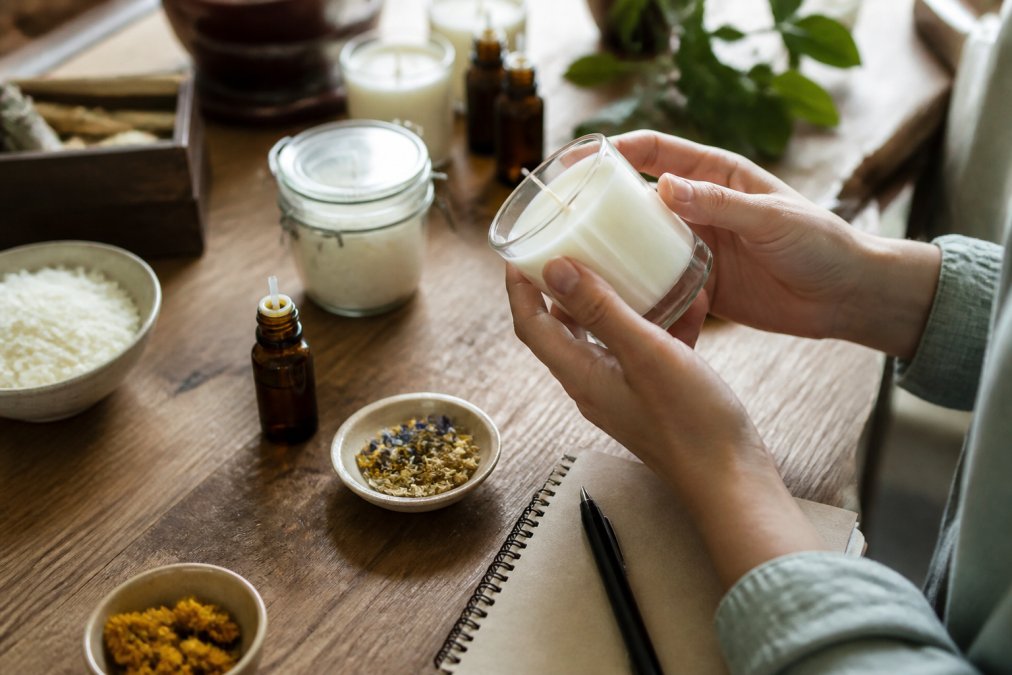
Check the ingredient list. A truly natural candle lists its wax type (soy, beeswax, coconut), fragrance source (essential oil, phthalate-free fragrance oil), and wick material (cotton, lead-free). If a candle doesn't list ingredients, that's a red flag.
Look for third-party certifications. Clean Air Certification and Cradle to Cradle require independent testing and verify what's actually in the product.
Watch for vague language. Phrases like "made with natural ingredients" or "eco-conscious" mean almost nothing. Specific claims, "100% soy wax," "phthalate-free fragrance," "lead-free cotton wick", matter.
Ask about sourcing. A maker that can tell you where their wax comes from, how it's processed, and whether it's certified sustainable is being transparent.
Test the candle yourself. Burn it for a few hours and check for soot buildup. Excessive black residue indicates poor wax quality or an oversized wick.
Verify scent throw claims. Real scent throw depends on fragrance concentration, wax type, room size, and air circulation. Be skeptical of claims that sound too good to be true.
Carbondale Candle candles are hand-poured with natural wax blends and phthalate-free fragrance, making them a solid choice if you want transparency about what goes into your home.
The candle industry lacks federal regulation for ingredient disclosure, so you're relying on maker honesty and your own research. Brands transparent about sourcing, testing, and ingredients are usually actually committed to making natural products.
When shopping for scented candles, the stakes are higher than aesthetics. You're choosing what burns in your home for hours, releasing compounds directly into the air you breathe. Natural ingredients matter because paraffin wax, phthalates, and synthetic additives accumulate in your system over time. Carbondale Candle's hand-poured candles use natural wax blends and phthalate-free fragrance, designed to enhance your home's ambience without hidden chemicals. Get Lit With Us and discover candles made with ingredients you can actually trust.
Frequently Asked Questions
What ingredients should I avoid in scented candles?
Avoid paraffin wax, which is a petroleum byproduct that releases volatile organic compounds when burned. Skip candles with phthalates (often hidden under 'fragrance'), parabens, and synthetic dyes. Lead-core wicks are also a concern, look for lead-free cotton or wood wicks instead. Natural ingredients in scented candles should be plant-based waxes, essential oils or clean fragrance oils, and non-toxic colorants. Check the label for specific ingredient lists rather than vague claims.
How can you tell if a candle is made with natural ingredients?
Look for candles labeled with specific wax types like soy, beeswax, coconut, or blends. Legitimate natural candles list their fragrance source (essential oils or phthalate-free fragrance oils). Check for certifications or third-party testing information. Hand-poured candles often indicate smaller-batch production with more ingredient control. Avoid vague marketing terms like 'eco-friendly' without supporting details. Reputable makers provide transparent ingredient lists on their website or product packaging.
Are there any 100% non-toxic candles available?
True 100% non-toxic candles are rare because fragrance itself, whether essential oil or fragrance oil, contains compounds that volatilize when heated. However, non-toxic candles for home use can come very close by using natural wax bases (soy, beeswax, coconut), phthalate-free fragrances, lead-free wicks, and avoiding synthetic dyes. The key is minimizing harmful chemicals rather than achieving zero risk. Hand-poured artisanal candles tend to offer better ingredient transparency than mass-produced options.
Why is paraffin wax considered unhealthy compared to soy or beeswax?
Paraffin is a petroleum byproduct refined from crude oil. When burned, paraffin wax releases volatile organic compounds and can produce soot that affects indoor air quality. The paraffin vs soy wax health comparison shows soy burns cleaner and is plant-based, making it a better choice for indoor spaces. Beeswax is even superior, it purifies air by releasing negative ions and burns longer. Coconut wax offers similar benefits to soy with a lower carbon footprint. These natural alternatives provide better scent throw without the petrochemical concerns.
This article was written using GrandRanker