
Table of Contents
- What Does a Clean Burn Actually Mean?
- Wax Matters: Paraffin vs. Soy vs. Beeswax
- Candle Wick Types and Soot: Choosing the Right One
- Fragrance and Dyes: Hidden Sources of Indoor Air Pollution
- How to Prevent Candle Soot with Simple Burn Habits
- Finding Non Toxic Candles for Home Use
- What to Look For in a Truly Clean Candle
- Conclusion: Burn Brighter, Breathe Easier
- Frequently Asked Questions
Last Updated: September 8, 2026
Walk into any home goods store and you will see hundreds of candles promising a cozy atmosphere. But what makes candles burn clean isn't the label that says "natural" or the pretty jar they come in. A truly clean candle comes down to the specific materials in the wax, the type of wick buried inside, and how you actually burn it once you get it home. At Carbondale Candle, we hand-pour every candle we sell, so we pay close attention to the science behind a clean burn.
What Does a Clean Burn Actually Mean?
A clean burn means the candle is combusting its fuel completely, producing mostly carbon dioxide and water vapor rather than unburned carbon particles and chemical byproducts. When a candle burns clean, it produces minimal soot, doesn't release harmful volatile organic compounds into your air, and doesn't leave black residue on your jar or nearby surfaces.
The opposite of a clean burn is incomplete combustion. This happens when the flame doesn't get enough oxygen or when the fuel source contains impurities. Incomplete combustion releases particulate matter and carbon buildup into the air, which can settle on walls, furniture, and even in your lungs.
Wax Matters: Paraffin vs. Soy vs. Beeswax
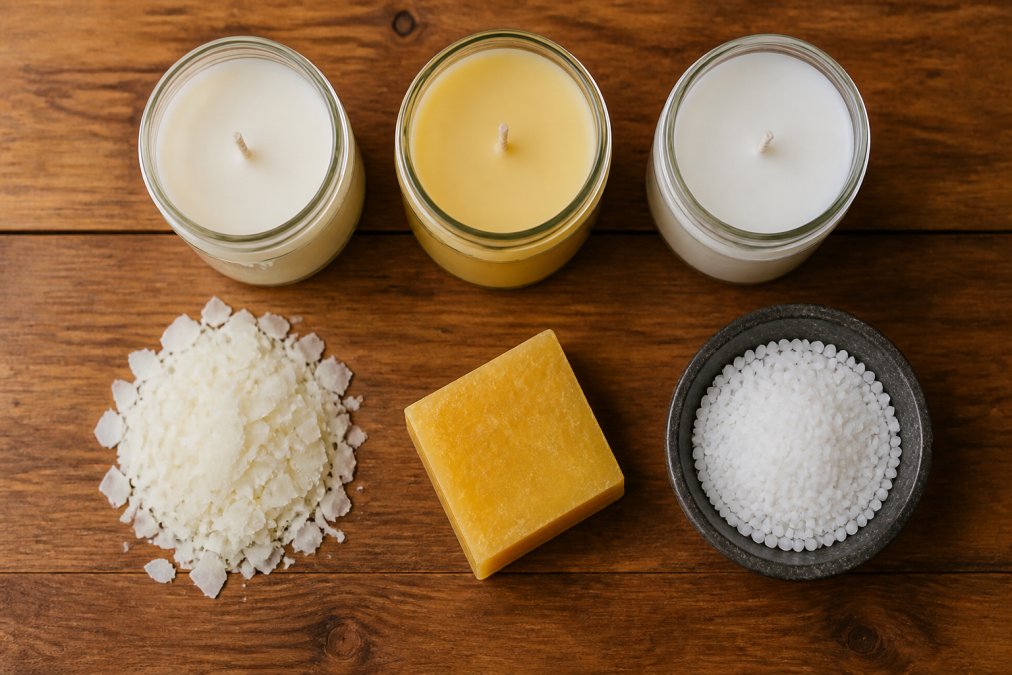
The wax is the single biggest factor in what makes candles burn clean. Candle wax falls into two broad categories: petroleum-based paraffin and natural waxes like soy or beeswax. The difference in how they burn comes down to their chemical structure and where they come from.
The Problem with Petroleum-Based Paraffin
Paraffin wax is a byproduct of petroleum refining. It is cheap, holds fragrance well, and makes up most of the candles sold at big-box retailers. However, paraffin is a petroleum-based product that releases more soot and a wider range of combustion byproducts when burned. The Environmental Protection Agency's guidance on combustion pollutants notes that burning any fuel source indoors can introduce particulate matter into the air, and petroleum-based waxes are no exception.
What many guides skip is the chemistry behind that soot. Paraffin is a straight-chain hydrocarbon with a lower flash point than natural waxes, meaning it vaporizes at a lower temperature. That makes the flame more sensitive to drafts and wick length, so it flickers more easily. A flickering flame cools the combustion zone, leaving unburned carbon particles behind, the black soot you see on jars and walls. Paraffin also tends to produce a wider range of volatile organic compounds (VOCs) when burned, including toluene and benzene, which are respiratory irritants. The National Candle Association's technical fact sheet on wax confirms that all major wax types can burn cleanly under ideal conditions, but the margin for error is much thinner with paraffin.
Why Plant and Bee Waxes Burn Cleaner
Soy wax, made from hydrogenated soybean oil, and beeswax, produced by honeybees, are natural waxes that burn more slowly and produce significantly less soot. Plant and bee waxes also have higher flash points, meaning they need to reach a higher temperature before they vaporize, which results in a more stable burn. At Carbondale Candle, we use a premium soy wax blend for our hand-poured candles.
Soy wax is a triglyceride, a much larger molecule than paraffin's straight chains, so it holds more heat before vaporizing, which is why soy candles tend to have a slower, steadier melt pool. The trade-off is that soy can be softer and more prone to frosting unless blended with other natural waxes like coconut or palm. Beeswax is a secretion from honeybees that's naturally high in esters and hydrocarbons. It burns with the longest, brightest flame of the common waxes and produces a subtle honey scent even without added fragrance. Beeswax combustion releases negatively charged ions, which can attach to positively charged particles like dust and pollen, causing them to fall out of the air rather than lingering in your lungs. The effect is measurable but modest, it's not an air purifier, but it does reduce airborne particulate load in a small room.
Coconut wax has the lowest melting point of the natural options, creating a shallow, cool melt pool that's less likely to overheat the jar, but it can struggle to throw scent in large rooms unless the fragrance load is high. Palm wax is another option, though it's less popular due to sustainability concerns. The practical takeaway is this: no single natural wax is 'best.' The cleanest burn comes from a wax that's matched to the wick, the fragrance load, and the vessel size.
Candle Wick Types and Soot: Choosing the Right One
Even a natural wax candle will burn dirty if the wick is wrong. The wick controls how much fuel reaches the flame, and getting that balance right is what makes candles burn clean. A wick that is too thick pulls too much wax into the flame, causing incomplete combustion and soot. A wick that is too thin starves the flame and causes tunneling.
Look for wicks labeled as lead-free cotton or wood. Lead-core wicks were banned in the United States years ago, but older candles may still contain them. Lead-free cotton wicks are the standard for a clean burn because they curl slightly at the tip as they burn, which keeps the flame stabilized and prevents mushrooming. Wood wicks crackle softly and burn at a consistent temperature, but they require a bit more attention to keep the flame from getting too tall.
Fragrance and Dyes: Hidden Sources of Indoor Air Pollution
The wax and wick are only half the story. Synthetic fragrance oils and dyes can turn an otherwise clean candle into a source of indoor air pollution. Many mass-produced candles use synthetic fragrances that contain phthalates, which are used to make scents last longer. When burned, these compounds can release volatile organic compounds into your home. The American Lung Association's guidance on indoor air quality recommends ventilating your home and being cautious with products that release fragrances into the air.
Essential oils are a natural alternative to synthetic fragrance, but they are not automatically safer. Some have low flash points and can burn off quickly, reducing scent throw. The key is fragrance load: the percentage of oil in the wax. A well-made candle balances enough fragrance to fill a room without overwhelming the wax's ability to burn clean. Synthetic dyes, especially dark ones, can also leave residue in the melt pool.
How to Prevent Candle Soot with Simple Burn Habits
You can buy the most expensive natural candle on the market, and it will still soot if you burn it wrong. Learning how to prevent candle soot is mostly about forming three simple habits: managing the first burn, keeping the wick trimmed, and respecting burn time limits.
The First Burn and the Melt Pool Rule
The first burn sets the stage for the entire life of the candle. Light the candle and let it burn until the entire top layer of wax becomes liquid, reaching the edges of the jar. This is called achieving a full melt pool. If you extinguish the candle before this happens, the wax will "tunnel" down the center, leaving a thick rim of unmelted wax around the sides. Once tunneling starts, it is nearly impossible to fix. Depending on the diameter of the jar, the first burn can take two to four hours.
Wick Trimming and Burn Time Limits
Trim the wick to about one-quarter inch before every single burn. This is the most overlooked step in candle care. A wick that is too long creates a large, flickering flame that produces soot and carbon buildup. Use a wick trimmer or simply pinch off the mushroomed tip with a paper towel after the candle has cooled. Also, avoid burning candles for more than four hours at a time, as the flame can become unstable and the melt pool gets too deep, leading to smoking and soot.
Diagnosing Burn Problems: What Your Candle Is Telling You
Most candle guides stop at 'trim the wick and don't burn too long.' But if you've done those things and your candle still misbehaves, the symptom itself points to the root cause. Here's a practical diagnostic guide:
If the flame is flickering or dancing: The wick is too long, or the candle is in a draft. Trim the wick to 1/4 inch and move it away from windows, fans, or HVAC vents. A steady flame should be teardrop-shaped and barely move. If it still flickers in a still room, the wick may be too thick for the wax, a manufacturing issue you can't fix at home.
If black soot is forming on the jar rim: This is almost always a wick-length problem. The flame is pulling more fuel than it can burn completely. Extinguish the candle, let it cool, trim the wick to 1/4 inch, and relight. If soot reappears within 15 minutes, the wick is too large for the candle's diameter, which is a defect in the candle itself.
If the flame is too tall or smoking: The wick has 'mushroomed', a carbon ball has formed at the tip. This happens when the wick is too long or the wax is burning too hot. Extinguish, let it cool, and pinch off the mushroomed tip with a paper towel. If it mushrooms again within an hour, the fragrance load may be too high for the wax, which is a formulation issue.
If the candle is tunneling (wax builds up on the sides): The first burn was too short, or the wick is too small for the jar. You can try to fix it by burning the candle for a longer session until the melt pool reaches the edges. If the tunnel is deep, you may need to wrap the jar in foil with a small opening at the top to trap heat and force the melt pool outward. This works best within the first few burns; once the tunnel is more than half an inch deep, it's usually permanent.
If the flame keeps going out: The wick is too short, or the melt pool has flooded the wick. Extinguish, pour out some of the melted wax if it's near the wick, and trim the wick to expose a fresh tip. If the wick is buried under wax, you may need to dig it out gently with a wick trimmer or a toothpick.
If the candle smokes when you blow it out: This is normal to some degree, but excessive smoke means the wick is too long or the flame was too large. Use a candle snuffer instead of blowing, blowing pushes oxygen into the flame and creates a burst of incomplete combustion. Snuffing cuts off oxygen cleanly and minimizes smoke.
If the wax is discoloring or turning brown: This is usually a sign of fragrance oil separation or dye degradation. It's cosmetic and doesn't necessarily mean the candle is burning dirty, but it can indicate low-quality fragrance oils. If the discoloration is accompanied by a burnt smell, extinguish the candle and stop using it.
If the glass jar is getting too hot to touch: The candle is burning too hot, which can happen if the wick is too large or the wax has a low flash point. Extinguish immediately and let it cool. A properly formulated candle should keep the jar warm but not painful to hold. If it's consistently too hot, the candle is unsafe to burn.
Finding Non Toxic Candles for Home Use
When you are shopping for non toxic candles for home use, the label is your first clue, but it is not the whole story. A candle labeled "natural" can still contain paraffin blended in with soy, and a candle labeled "clean" can still use synthetic fragrance. The most reliable approach is to read the ingredient list and ask the maker directly about their wax, wick, and fragrance sources.
A genuinely non toxic candle for home use should list its wax source clearly, use a lead-free cotton or wood wick, and skip synthetic dyes. If scented, the maker should be transparent about whether they use essential oils or a phthalate-free fragrance oil. Small-batch makers are usually happy to answer these questions. When you buy a hand-poured candle from a local artisan, you can often see exactly what goes into it, a level of transparency you rarely get from a mass-produced candle on a shelf.
What to Look For in a Truly Clean Candle
If you want to verify that a candle will burn clean before you buy it, look for a few specific markers. The wax should be a natural base like soy, beeswax, or coconut, and the wick should be cotton, wood, or another plant-based material. The fragrance, if any, should be phthalate-free, and the candle should not contain synthetic dyes.
Vessel material also matters more than most people realize. A candle poured into a wide, stable glass jar burns more evenly than one in a narrow or oddly shaped container, because the melt pool can spread properly. Our 10oz Frosted Black Jar Candle and Clear Jar 15oz options are poured in vessels that support a full melt pool. The National Candle Association's candle care guidelines recommend matching the candle to a properly sized container to ensure an even burn and to always burn candles in a well-ventilated room.


Conclusion: Burn Brighter, Breathe Easier
A clean candle burn is not a mystery. It comes down to natural wax, a lead-free wick, phthalate-free fragrance, and simple burn habits like trimming the wick and respecting the four-hour limit. Most of the soot and headaches people blame on candles come from petroleum-based paraffin, synthetic additives, and poor burn practices.
At Carbondale Candle, we pour every candle by hand using a premium soy wax blend and lead-free wicks, so you can enjoy the ambience without worrying about what you are breathing. Whether you choose a personalized jar candle for a gift or a double-scented wood wick for your living room, you are getting a candle designed to burn clean and even, every single time. Get Lit With Us and see the difference a clean, hand-poured candle makes in your home.

Frequently Asked Questions
What does it mean when candles burn clean?
A clean-burning candle produces minimal soot, smoke, and volatile organic compounds. It relies on a few key factors: a pure wax like soy or beeswax, a lead-free cotton or wood wick, and a fragrance load that doesn't overpower the wax. When these elements work together, the flame stays stable and the candle burns evenly without releasing the particulate matter associated with petroleum-based paraffin. You can test this yourself by watching for black smoke and checking the glass for carbon buildup.
Is paraffin wax considered clean-burning?
Paraffin is a petroleum byproduct, and when burned, it can release volatile organic compounds like benzene and toluene into your indoor air. While modern refining has improved its quality, paraffin still produces more soot than plant-based waxes like soy or coconut. If you want a truly clean burn, look for candles made with 100% soy, beeswax, or a soy blend. These natural waxes burn slower, produce less carbon buildup, and don't carry the same petroleum-based concerns.
How do wick materials affect candle soot production?
Wick material directly impacts how much soot your candle produces. Lead-core wicks were banned in the US, but some imported candles still contain them, so always choose candles with cotton or wood wicks. Cotton wicks should be braided and trimmed to about 1/4 inch before every burn. A wick that's too long creates a large, unstable flame that produces mushrooming and excess soot. Wood wicks, like the ones used in our Double Scented candles, can create a consistent melt pool.
Is it possible for scented candles to be non-toxic?
Yes, scented candles can be non-toxic when made with the right ingredients. The key is avoiding synthetic fragrances that contain phthalates, which are used to make scents last longer. Instead, choose candles scented with essential oils or phthalate-free fragrance oils. The wax matters too: soy and beeswax burn cleaner than paraffin. At Carbondale Candle, we hand-pour our candles with premium fragrance oils.